Last reviewed November 12, 2026 by Vancouver Picks Editorial Team
Why flush your tank?
Minerals and debris settle at the bottom of a tank. On gas tanks this layer sits between the burner and the water; on electric tanks it can bury the lower element. Signs of buildup include rumbling or popping sounds, slower recovery and rusty or cloudy water. Many manufacturers recommend flushing about once a year; check your tank's manual.
Before you start
- Read the manual and labels on your tank. Instructions vary by model.
- Water is scalding. Let it cool for a few hours, or work carefully with gloves.
- If your tank is old and the drain valve has never been opened, it may leak or fail to close. Have a towel, bucket and a replacement plan ready, or call a plumber.
- Tankless water heaters use a different descaling process. Don't follow this guide for those.
What you'll need
- Garden hose
- Bucket
- Flat screwdriver (some drain valves)
- Gloves and towels
Step-by-step
- Turn off the heat source.
- Gas: turn the gas control to "Pilot" or "Off" per the label.
- Electric: switch off the breaker for the water heater.
- Shut off the cold water supply valve at the top of the tank.
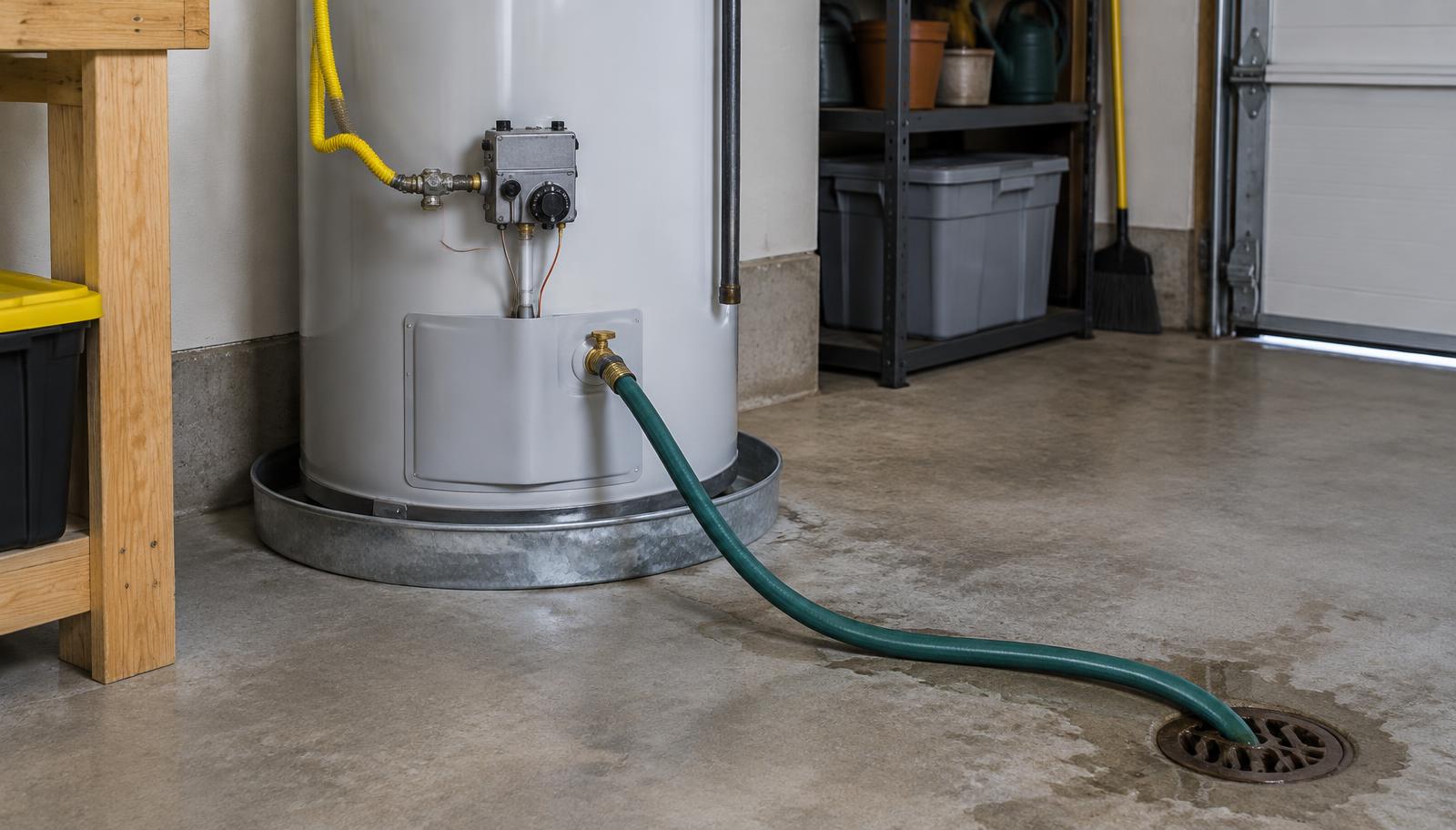
- Attach a garden hose to the drain valve at the bottom and run it to a floor drain or outside to a spot lower than the valve.
- Open a hot water tap somewhere in the house to let air in so the tank drains.
- Open the drain valve and let the water run. Watch for sediment; it may come out cloudy or gritty.
- Stir up remaining sediment: with the drain still open, briefly open the cold supply valve for a few seconds, then close it. Repeat until water runs clear.
- Close the drain valve, remove the hose and open the cold supply to refill.
- Wait until water flows steadily from the open hot tap (all air out), then close it.
- Restore heat. Relight or turn the gas control back on per the label, or switch the breaker back on. Never power an electric tank before it is full, or the elements can burn out.
While you're there
- Test the pressure relief valve per the manual (water will be hot).
- Look for rust or moisture around the base, a sign the tank may be near the end of its life.
- Ask about the anode rod. A plumber can inspect this sacrificial rod, which protects the tank from corrosion.
Call a plumber if...
The drain valve won't open or close, water stays rusty, the tank leaks, or you smell gas (leave the house and call FortisBC's emergency line or 911). Use the form on this page to request quotes from local plumbers.
Frequently asked questions
How often should I flush my hot water tank?
Many manufacturers recommend once a year. Check your tank manual.
Can flushing damage an old tank?
On older tanks that have never been flushed, the drain valve may leak or sediment may clog it. Consider having a plumber do the first flush.
Why is my hot water tank making popping noises?
Usually sediment at the bottom of the tank. Flushing often reduces the noise.
Looking for plumbers?
See plumbers across Metro Vancouver →Related
How to Choose a Reliable Plumber in Vancouver
A practical checklist for finding a plumber in Vancouver you can trust — from licensing and insurance to quotes, warranties and red flags.
Updated November 12, 2026GuideHow Often to Pump a Septic Tank in BC
Thousands of homes in the Fraser Valley, Sunshine Coast and rural Metro Vancouver rely on septic systems. Pumping on schedule protects your drainfield, which is far more expensive to replace than the tank is to service.
Updated November 12, 2026