Last reviewed November 12, 2026 by Vancouver Picks Editorial Team
Why humidity matters in Metro Vancouver
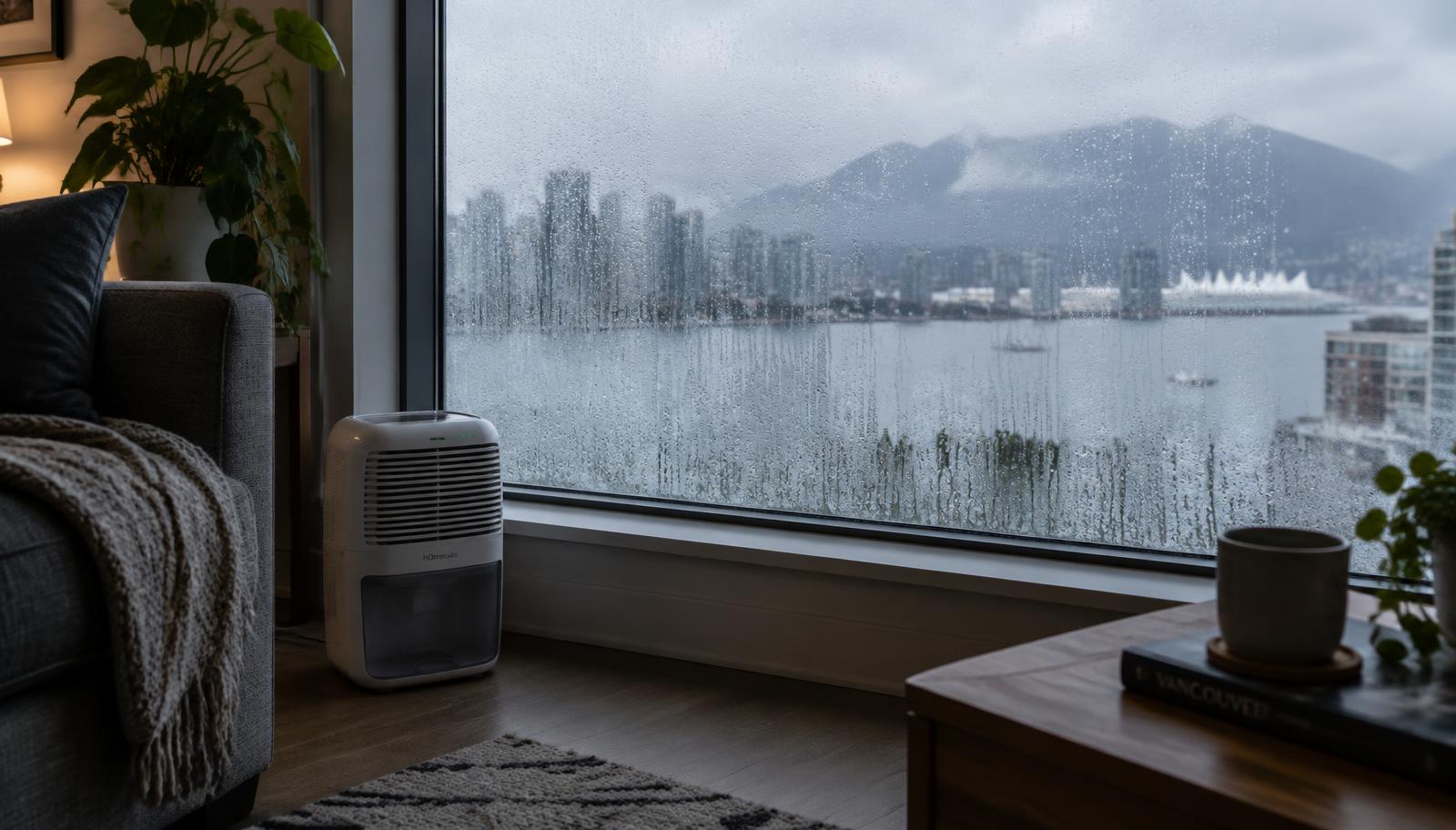
Our mild, rainy winters mean outdoor air is often damp, and modern homes are built tighter than ever. Cooking, showers, drying laundry and even breathing add moisture that has nowhere to go. The result: condensation on windows, peeling paint, musty closets and mould.
Health Canada advises keeping indoor moisture under control to prevent mould, and commonly cited guidance is to keep relative humidity below about 50%, and lower (around 30–45%) during cold weather to avoid condensation on windows. A cheap digital hygrometer from any hardware store will tell you where you stand.
Free habits that make a big difference
- Run the bathroom fan during every shower and for 20–30 minutes after.
- Use the range hood while cooking, especially when boiling water. Vent it outside if possible.
- Cover pots when simmering.
- Dry laundry outside or in a vented dryer, not on racks indoors.
- Open windows briefly on drier days, even in winter. Ten minutes of cross-ventilation helps.
- Keep furniture a few inches off exterior walls so air can circulate.
- Open blinds and curtains during the day so window glass stays warmer.
Tools and small upgrades
Dehumidifiers
A portable dehumidifier is the fastest fix for a damp basement or bedroom. Size it to the space, empty or drain it regularly, and clean the filter per the manual. Set it around 45–50%.
Bathroom fan check
Hold a sheet of toilet paper to the fan grille. If it doesn't hold, the fan is weak or the duct is blocked. Many older fans also vent into the attic rather than outside, which moves the problem rather than solving it.
Fix water getting in
Clean gutters, make sure downspouts direct water away from the foundation, and look for leaks around windows. Indoor humidity often has an outdoor source.
When to call a professional
- Persistent condensation even after the habits above
- Musty smells you can't trace
- Mould returning after cleaning
- Water staining on ceilings or walls
An HVAC contractor can assess ventilation options such as a heat recovery ventilator (HRV), which exchanges stale indoor air for fresh outdoor air while keeping most of the heat. A heat pump in cooling or dry mode can also help in summer. For leaks and water damage, talk to a restoration company.
Ready to get quotes? Use the form on this page to reach local pros.
Frequently asked questions
What humidity level should my house be in winter?
Commonly cited guidance is roughly 30 to 45 percent during cold weather and below 50 percent year-round. Use a hygrometer to measure it.
Why are my windows wet every morning?
Warm, moist indoor air condenses on cold glass overnight. Lower indoor humidity, ventilate bedrooms and keep blinds open during the day.
Will an air purifier lower humidity?
No. Air purifiers filter particles. You need ventilation or a dehumidifier to remove moisture.
Looking for hvac companies?
See hvac companies across Metro Vancouver →Related
How Often to Change Your Furnace Filter (BC Homeowner Guide)
Most homes need a new furnace filter every one to three months during heating season. Here is how to pick the right interval for your filter, your household and Metro Vancouver's long, damp heating season.
Updated November 12, 2026GuideHow to Clean a Heat Pump: Indoor and Outdoor Unit Guide
Heat pumps are now one of the most common ways to heat and cool homes across Metro Vancouver. A little regular cleaning keeps them running efficiently. Here is what you can do yourself and what to leave to a technician.
Updated November 12, 2026